Tutorial 12 · The nuclear age
Nuclear: uranium, reactor and turbine
Nuclear power in Rustfall starts with uranium ore: the electric crusher grinds it into dust, the centrifuge turns four dusts into one enriched uranium, and three enriched uranium make a fuel rod that lasts 30 minutes at full power. The reactor and the turbine are two hollow boxes built by hand, 3 to 15 blocks a side: the reactor turns water into steam, the turbine takes in 1,000 mB/s per rotor and returns up to 4 RC per mB. Above 3,000 °C for five seconds, the core melts into corium.
- Advanced
- 9 steps
- 230 blocks in the 3D scene
- The nuclear age
What you need
Building the scene…
- Step 1 of 9
Enrich the uranium
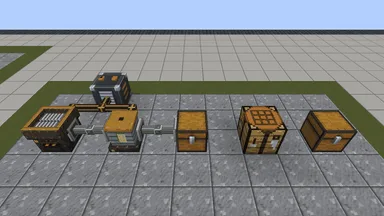
Uranium Ore is found in deep veins (from −60 to 8) that glow faintly. Run it through the electric crusher to get Uranium Dust, then through the Centrifuge: four dusts give one Enriched Uranium.
WhyThe centrifuge does two jobs: it enriches uranium and, later, reprocesses depleted rods (two dusts and some nuclear waste per rod).
- Uranium veins
- from −60 to 8
- Enrichment
- 4 dusts → 1 enriched uranium
- Centrifuge
- 300 RC/s, 10 s per operation
Place at this step
Common mistakeSmelting uranium dust in a furnace: it doesn't melt into an ingot, it is enriched in the centrifuge.
- Step 2 of 9
Craft the fuel rods
At the crafting table, three enriched uranium and six steel ingots make a Fuel Rod. A rod lasts 30 minutes in a reactor at full power; once depleted, the centrifuge gets two uranium dusts and some Nuclear Waste out of it.
- One rod
- 3 enriched uranium + 6 steel
- Lifetime
- 30 minutes at full power
- Depleted rod
- 2 uranium dusts + waste
Place at this step
 Crafting table
TipEight fresh rods, never used in a reactor, wake the Strider: keep some aside for the boss.
- Step 3 of 9
Build the reactor casing
The reactor is a hollow box built by hand, 3 to 15 blocks a side. Start with the edges, all in Reactor Casing: here a 5 × 5 × 5 reactor, the one from the in-game demo, which takes forty-four casings for the edges.
WhyThe rule for these boxes: edges are casing; faces are casing, reinforced glass, ports or the controller (only one). The structure is only re-checked when a block changes inside the box or right around it.
- Size
- 3 to 15 blocks a side
- Water
- 1,000 mB per empty space inside
- Casing
- 4 steel, 4 obsidian, 1 steel frame → 4
Place at this step
Common mistakeBuilding the smallest box, 3 × 3 × 3: it has a single space inside. Once the fuel cell is in it, there is no room left for water, and a reactor without water melts down. You need at least two spaces inside (3 × 3 × 4), and bigger is safer.
TipGlass, ports, controller and hatch go in the middle of the faces, never on an edge: otherwise the box is not recognised.
- Step 4 of 9
Fill the core and place the hatch
Close the floor with casing. Inside, stack three Fuel cells in the centre (the assemblies that receive the rods, one each) and leave everything else empty: that is where the water goes. On one face, a Fuel hatch: an item conduit brings rods to it from a chest, without opening the reactor.
WhyEach empty space inside holds one bucket of water (1,000 mB); a filled space holds none. Here the inside is 3 × 3 × 3, so 27 spaces: three fuel cells, 24 empty spaces, hence 24,000 mB of water. Each assembly heats up, and heats more if the column next to it is filled too.
- Reactor water
- (spaces inside − filled spaces) × 1,000 mB
- Here
- 27 − 3 = 24 spaces, 24,000 mB
- Hatches
- 2 at most per reactor
Place at this step
Common mistakeFilling the whole inside with fuel cells: no space left for water, and the core melts.
- Step 5 of 9
Close it up: controller, glass and ports
Close the remaining faces: the Reactor Controller on the front, Reinforced Glass on the front and on top to see the water, an input port for water, an output port for steam, and casing everywhere else.
WhyEvery second the reactor computes a heat grid, one cell per column: the assemblies heat up, heat spreads to neighbouring columns, the water takes it away by boiling and the steam leaves through the output ports.
Place at this step
Common mistakePlacing two controllers on the same box: it takes exactly one.
- Step 6 of 9
Build the turbine
The turbine is a second box: Turbine Casing on the edges, a Turbine Controller, glass and ports on the faces. Inside, three stacked Turbine Rotors and two Generator coils.
WhyEach rotor takes in 1,000 mB/s of steam. With one coil for every two rotors the yield is full: 4 RC per mB, twice a steam generator. Without a coil, the turbine returns only half. Three rotors take in 3,000 mB/s, enough for all the steam of the three assemblies.
- Steam
- 1,000 mB/s per rotor
- Yield
- up to 4 RC per mB
- Coils
- 1 for 2 rotors
Place at this step
- Step 7 of 9
Connect steam, water and power
A Steel Pipe carries steam from the reactor's output to the turbine's input. A second pipe brings the condensed water from the turbine back to the reactor's input: the loop is closed. The turbine's controller gives out power through its face: a Superconductor Cable takes it to a Battery T3.
WhyA pipe network carries only one fluid at a time: steam and water each have their own pipe. To fill the loop at the start, you need water on the return pipe: a Water Pump connected to it provides it.
- Steel Pipe
- 8,000 mB/s
- Superconductor Cable
- 16,000 RC/s
- Battery T3
- 4,000,000 RC, 8,000 RC/s
Place at this step
Recipes
 8Superconductor CableOpen its page ›
Superconductor Cable × 8 In the assembler: 8 × Gold wire, 2 × White brass ingot, 2 × Tempered steel plate (makes 8).
Common mistakeTaking a turbine's power out on copper cable: the network tops out at 250 RC/s and the turbine shows “Network saturated”.
- Step 8 of 9
Start up and set the control rods
Load the rods: the reactor heats up, the water boils, the turbine gathers momentum. Open the reactor controller and set the control rods, in steps of ten percent. A redstone signal on the controller pushes them all in: that is the emergency stop.
WhyAbove 3,000 °C for five seconds, the core melts: the assemblies turn into corium, the casing holds, a burst of radiation hits nearby players, and the reactor only restarts once the corium has been removed (diamond tool, protective suit recommended).
- Control rods
- in steps of 10%
- Meltdown
- above 3,000 °C for 5 s
- Emergency stop
- redstone signal on the controller
Common mistakeStarting a reactor without water, cutting the water or blocking the steam of a running reactor: the heat has nowhere to go and the temperature climbs to meltdown.
TipThe Engineer's Goggles read the reactor's temperature and the turbine's momentum without opening any window.
- Step 9 of 9
Protect yourself from radiation
Every second you take a dose: corium within eight blocks, nuclear waste and depleted rods in your inventory. The dose builds up, drops again once you are sheltered, and brings hunger, then nausea and weakness, then poison, then wither. Wear the hazmat suit (yellow wool and leather): each piece stops 24% of the dose.
WhyWaste is not just a hazard: the centrifuge turns two nuclear waste into one tritium capsule, the fuel of the end-game Fusion Chamber.
- Corium
- radioactive within 8 blocks
- Hazmat suit
- 24% per piece, 4 pieces
- Containment set
- 25% per piece, dose drops 5 times faster with the full set
Common mistakeKeeping depleted rods or waste in your inventory “for later”: they irradiate you for as long as you carry them.


 8
 2
 2
What you end up with
A complete closed-loop nuclear plant: the reactor turns water into steam, the turbine gets up to 4 RC per mB out of it and sends the water back, and a superconductor cable fills a Battery T3.
In the in-game demo
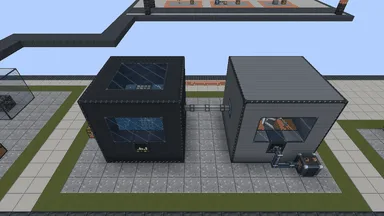
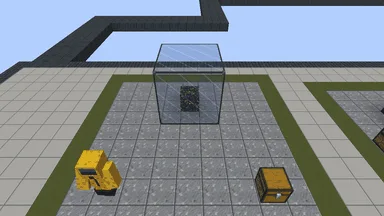
These builds exist for real in Rustfall’s “Demo & help” world (the game’s Esc menu): every stand runs, and its sign says what it does. Here are those signs, as written in the game.
Frequently asked questions
How do you get enriched uranium?
The electric crusher turns uranium ore into uranium dust, then the centrifuge turns four dusts into one enriched uranium.
How long does a fuel rod last?
A fuel rod (3 enriched uranium and 6 steel) lasts 30 minutes in a reactor at full power. Once depleted, the centrifuge gets two uranium dusts and some nuclear waste out of it.
How big is a reactor?
A reactor is a hollow box 3 to 15 blocks a side, built by hand: edges in reactor casing, faces in casing, reinforced glass, ports or the controller (only one), fuel assemblies inside. Each empty space inside holds 1,000 mB of water: a 3 × 3 × 3 with one assembly holds none and melts down, so you need at least a 3 × 3 × 4. The one in this tutorial is 5 × 5 × 5, with three assemblies and 24,000 mB of water.
What happens if the reactor overheats?
Above 3,000 °C for five seconds, the core melts: the assemblies turn into corium, radioactive within eight blocks, and the reactor only restarts once the corium has been removed with a diamond tool.
Related blocks and items
 Uranium Ore
 Deepslate Uranium Ore
 Raw Uranium
 Uranium Dust
 Enriched Uranium
 Centrifuge
 Fuel Rod
 Depleted Fuel Rod
 Nuclear Waste
 Reactor Casing
 Reinforced Glass
 Reactor Controller
 Fuel hatch
 Fuel cell
 Intake Port
 Outlet Port
 Turbine Casing
 Turbine Controller
 Turbine Rotor
 Generator coil
 Corium
 Hazmat Mask
 Containment Plate
 Tritium Capsule
 Fusion Pellet
 Fusion Chamber
- Superconductor Cable
 Battery T3
 Stable Core Battery
What’s next
- Tutorial 16
The Outrefaille and its bosses
Build and power the Rustfall rift gate (one core, seventeen frames, 12,000 RC), enter the Outrefaille, and learn its vermin, its bosses and their loot.
- Tutorial 13
Equipment
Rustfall's electric equipment: eyes, back and belt slots, chargers T1 to T3, belt battery, jetpack and dash, battery-powered drill and chainsaw.
- Tutorial 17
Understanding the economy
The Rustfall economy: crowns, selling to the network, the price B / (1 + P / K), the cap on each item, freight quay thresholds and money sinks.